
EMEA News Q4 2026
Akureyri Clinic Update

An Update: The Akureyri Clinic and its Role in ME and Long Covid Care
More than two years after its opening in August 2024, the Akureyri Clinic has become an important part of Iceland's response to ME and Long Covid.
The clinic was established at a time when the number of people affected by post-infectious conditions was becoming increasingly visible, particularly following the COVID-19 pandemic. Supported by the Icelandic health authorities, it was designed to bring greater structure to the way patients are assessed, supported and followed up within the healthcare system.
The opening of the clinic was reported at the time by EMEA UK member Invest in ME Research: The Akureyri Clinic.[1]
European ME Research Group (EMERG) member Dr Friðbjörn Sigurðsson was closely involved in the initiative. Sigurðsson also presented at IIMEC17, the 17th Invest in ME Research International ME Conference, in May 2026: Dr Friðbjörn Sigurðsson at IIMEC17. [2]
What has emerged since then is a service that combines clinical care with coordination and data collection, something that is still not widely available in many other European countries.
A Structured Pathway for Patients
Access to the clinic is arranged through referral from primary care physicians. This ensures that patients are first assessed locally, before being seen by a specialist team when ME or a related condition is suspected.
For patients living far from Akureyri, the clinic offers video consultations. This is a practical necessity for a patient group that often experiences severe limitations in mobility and energy.
This model addresses a gap that many people with ME across Europe still face: the absence of clear pathways to clinicians with relevant expertise.
Working Across Disciplines
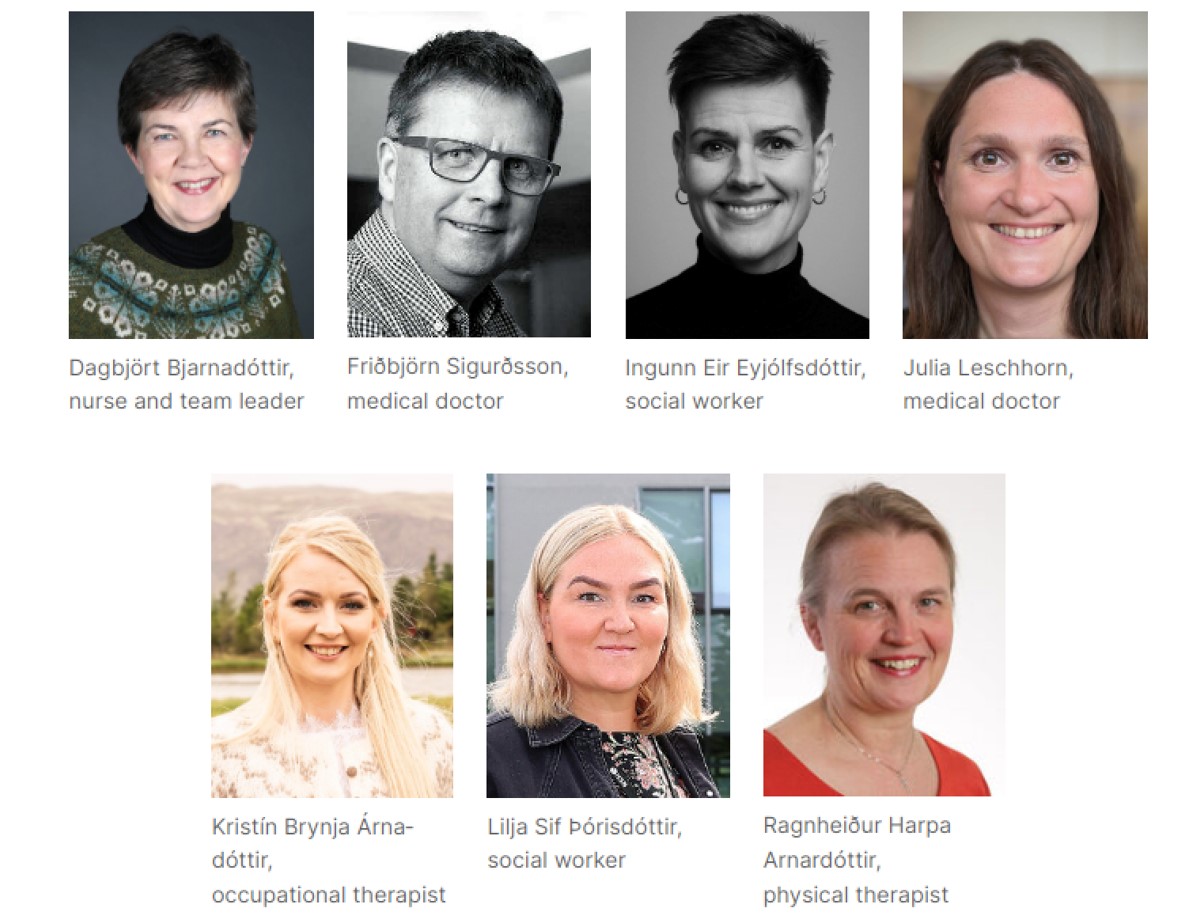
From the outset, the clinic has brought together professionals from a range of backgrounds, including doctors, nurses, social workers, occupational therapists, physiotherapists and data specialists.
This reflects the reality of ME and Long Covid. Patients are dealing not only with physical symptoms such as fatigue, post-exertional malaise and cognitive difficulties, but also with the wider consequences for daily life, including work, education and social participation.
An interdisciplinary team allows these different aspects to be addressed in a coordinated way, rather than leaving patients to navigate multiple parts of the system on their own.
Links with the Wider Health System
The Akureyri Clinic does not operate in isolation. It works with partners across the Icelandic healthcare system, including Landspítali University Hospital and rehabilitation services such as the Reykjalundur Rehabilitation Centre.
These connections are important for continuity of care, particularly for patients whose needs change over time or who require input from different specialties.
They also reflect an effort to integrate ME and Long Covid into existing healthcare structures, rather than treating them as separate or marginal conditions.
Building a Clearer Picture
One of the clinic's key responsibilities is the development of a national registry for ME and Long Covid. This work is still in progress, but it is expected to provide a more accurate picture of how many people are affected and how the conditions develop over time.
Such data has largely been missing in the past, both in Iceland and elsewhere. Without it, planning services and research becomes significantly more difficult.
The clinic is also linked to research initiatives focusing on infection, immunity and long-term health outcomes. The Icelandic members of EMERG, both researchers and clinicians, are involved in the ground-breaking EU Horizon-funded DISCOVER-ME project.
Working with Patient Organisations
An important part of the clinic's development has been its collaboration with EMEA member the ME Society of Iceland. This partnership has supported both awareness-raising and the development of practical resources for patients, professionals and the wider public.
A recent example is a new educational brochure focusing on children and adolescents living with ME or Long Covid. The brochure is being distributed to teachers and staff in primary schools across Iceland, as well as to paediatricians, with the aim of improving understanding of how these conditions affect young people, particularly in educational settings.
Further work is already under way. The next step is the development of an emergency information card for patients to carry with them. The card is intended to support healthcare professionals in emergencies or during medical procedures, where a better understanding of ME can be critical to appropriate care.
A Point of Reference for Europe
It was clear from an early stage that demand for specialist services was substantial, and this has not changed. The number of patients seeking assessment and support continues to reflect the scale of the challenge.
This is not unique to Iceland. Across Europe, healthcare systems are still adapting to the long-term consequences of COVID-19, as well as to longstanding gaps in the recognition and treatment of ME.
The experience of the Akureyri Clinic offers a valuable example of how services can begin to take shape when there is coordination between government, clinicians and researchers, and a clear commitment to organising care at national level.
Questions of capacity, long-term funding and the development of effective treatments remain. Nevertheless, the clinic provides a starting point, and a practical reference, for other countries seeking to improve care for people with ME and Long Covid.

Last Update: November 2026